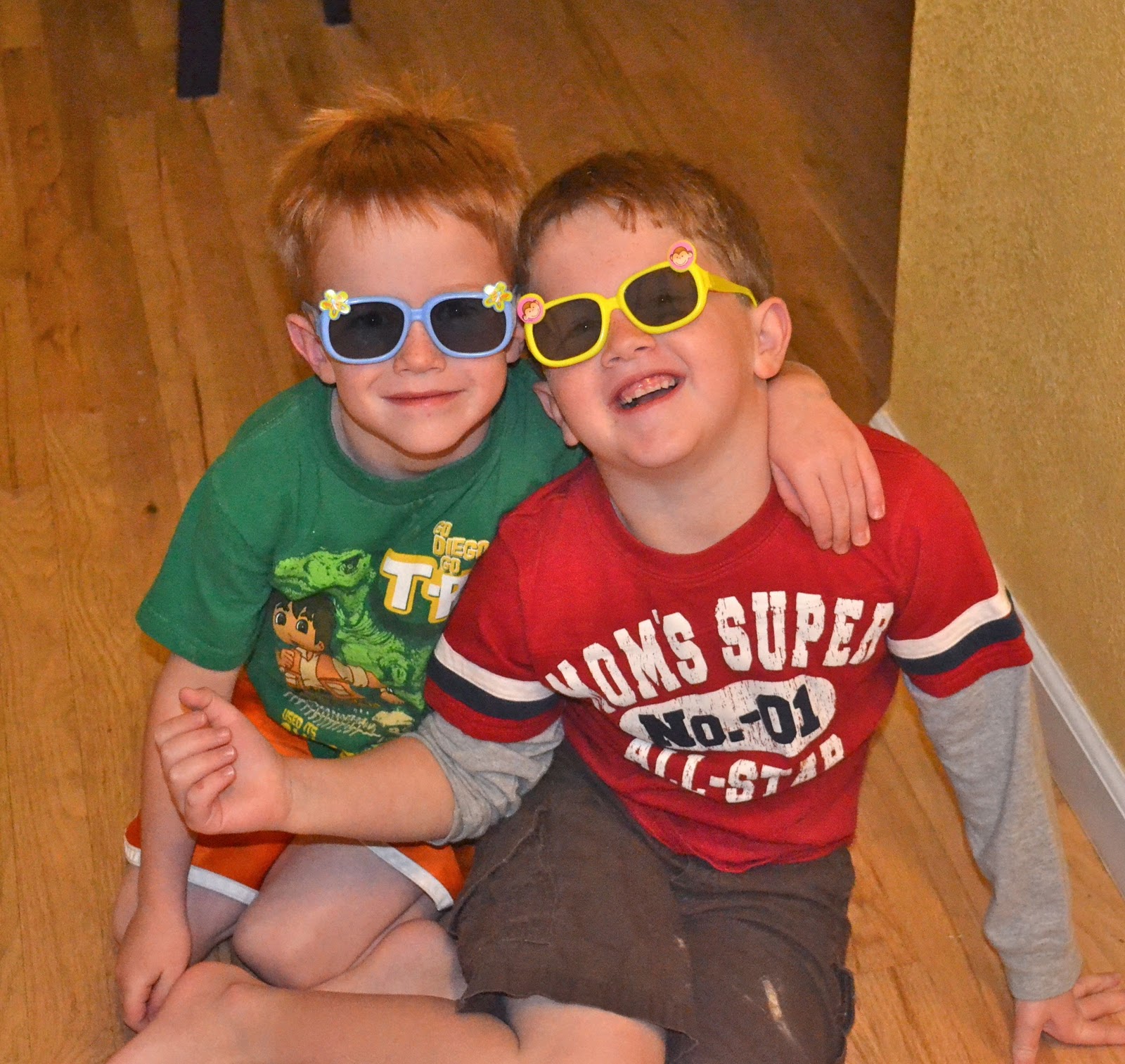
My brother and I are each other's biggest fan. Unless you're new here, you've undoubtedly read my praises and affirmations of all things Rob in dozens of posts. I dig him.
He and I often hear that question: "How did you two become such good friends?"
Our parents hear a variation of the same: "How did you teach them to do that?"
Per reader request, I write today to answer that question.
My brother and I faithfully say that our friendship is in large part due to the environment our parents created at home; our parents faithfully say that our friendship had little to do with them and much to do with our decisions as siblings.
I propose it is a recipe of both.
Our parents laid some foundational groundwork:
1. No name calling. It's okay to be angry, but it's not okay to be mean.
2. No physical violence. Say what you need to say, but do not hit, scratch, punch, or pull hair. Ever. (There was one serious battle over the TV remote control when we were 9 and 11, and my parents followed through: no dice. Don't try that again.)
3. Our home was a fun place to be. Our family had fun together, we laughed a lot, and that made my brother and me want to come home. And we were always, always welcome to bring our friends, any amount of them, at any hour of the day or night. As a teenager, I loved this social perk. As a mom, I get the added benefits: they always knew where we were and who we were with.
4. While friends were welcome always, there was one exception: Our family vacations were exclusive to our family. We had a getaway once a year, and the destination and duration varied on the family finances that year. But there was always a vacation, and it belonged to only us. My brother and I were never allowed to bring a friend along; we were encouraged to find friendship in each other. As a result, all our favorite memories are mutual - we share them with each other, not with a friend or neighbor passing through for this life stage.
So, those were the foundational pieces. Please don't be deceived: there were a good many years when we did not enjoy each other at all, and if our choices were only each other, then we would choose to play alone. Our affinity didn't come as a birthright. We chose it later on.
When we were 14 and 12, we watched my uncle die a long, slow death at a very young age. We watched our dad lose his younger brother. And we caught our first glimpse of the fragility of life and the gift of a sibling.
And we both remember the day we said to one another, "So, hey, how about this: what if we decide to like each other?" We didn't know any other siblings who got along, who truly preferred each other, and we wondered what it might be like to give it a go.
"Friends?" "Best friends. It starts today."
We established our own code of conduct that has held one basic theme: we'll never let the other feel lonely.
And we've never looked back.